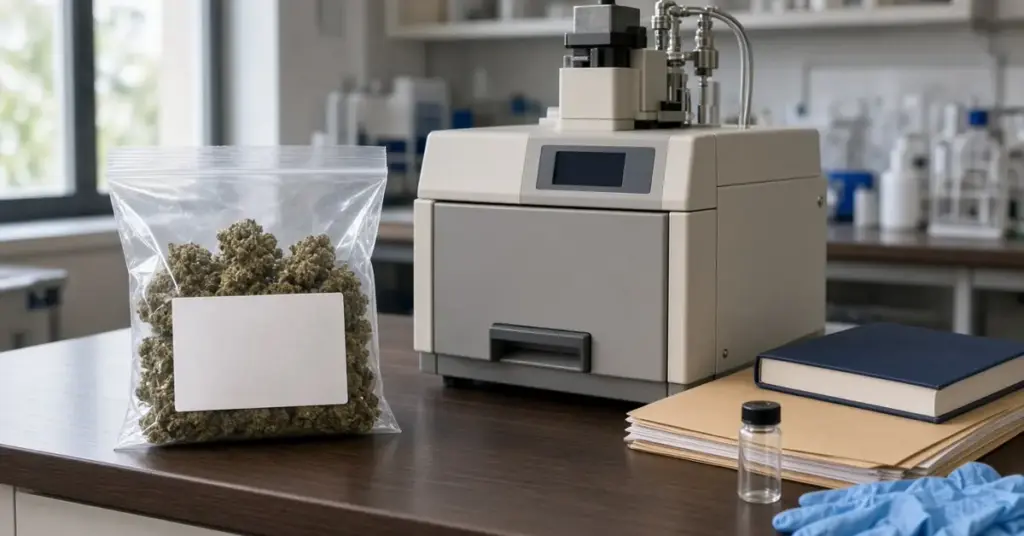
I recently recorded a video about THCA testing in smoke shop investigations. Law enforcement has become more aggressive with operators who sell THCA. Officers are seizing products and freezing bank accounts. They are also filing serious felony charges. The justification is often a laboratory result well above 0.3 percent THC. I have seen results reported at 20 percent THC, and sometimes at 25 percent THC. Officials then claim the shop was selling illegal marijuana all along.
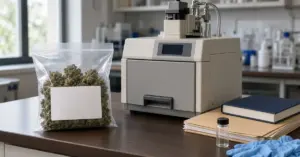
The testing method is the problem. Law enforcement uses gas chromatography. That method heats the plant material and converts THCA into THC. As a result, hemp that meets the 2018 Farm Bill definition can produce a high THC result once the instrument applies heat. Officers then use those results to obtain search warrants. In my view, that practice creates a serious evidentiary issue.
What I Am Seeing in Smoke Shop Cases
Smoke shop operators are selling flower products labeled as THCA or as hemp. Many of those packages describe the product as Farm Bill compliant. Law enforcement treats a high laboratory THC number as proof that the product was illegal marijuana. Officers then seize the product. They freeze bank accounts. Felony charges follow.
I therefore understand why the numbers attract attention. A report of 20 percent or 25 percent THC sounds decisive. However, a laboratory number is only as useful as the method behind it. I am seeing this pattern in THCA testing investigations. The first question is not simply how high the number is. The first question is what the laboratory actually measured.
In fact, a criminal case is not decided by a label, and it is not decided by a single headline figure. Prosecutors still have to prove the elements of the charged offense. The science, the search, and the legal standard all matter. I have spent more than 24 years as a prosecutor and as a criminal defense attorney examining evidence of this kind. I do not accept a laboratory report at face value.
How THCA Testing by Gas Chromatography Converts THCA Into THC
THCA is tetrahydrocannabinolic acid. It occurs naturally in cannabis. THCA is chemically different from delta-9 THC, which is the primary intoxicating cannabinoid in the plant. Heat converts THCA into delta-9 THC through a process called decarboxylation. That is why smoking or vaporizing THCA flower can produce an intoxicating effect.
Gas chromatography is a laboratory method that separates and measures chemical compounds. The method uses heat. The United States Department of Agriculture explained this in its 2021 hemp production rule. Heat applied during gas chromatography converts THCA from its acid form into THC. The reported result is therefore a total potential THC value. It is not a separate measurement of the delta-9 THC already present in the unheated plant material.
How Liquid Chromatography Differs in THCA Testing
Liquid chromatography works differently. It does not rely on significant heat. As a result, THCA generally remains intact. A laboratory using liquid chromatography can report THCA and delta-9 THC as separate figures. If the laboratory needs a total THC number, it calculates that number after the test. The Department explains that the usual calculation adds measured THC to 87.7 percent of the measured THCA. That 87.7 percent factor accounts for the change in molecular weight when THCA loses a carbon dioxide group.
The National Institute of Standards and Technology has also published research on THCA decarboxylation during gas chromatography. Forensic and commercial laboratories often use this method to measure total THC. The Institute has also examined accuracy challenges in those measurements. Liquid chromatography can provide a useful comparison because it can measure the two compounds separately.
This scientific difference matters in a criminal case. A single THC number on a laboratory report may not tell the whole story. In a THCA testing dispute, I want to know what the laboratory actually measured. Did the test convert THCA into THC by heating the sample? Did the report separate the two compounds? Those questions come before any argument about guilt.
The 2018 Farm Bill Standard for Hemp
The Agriculture Improvement Act of 2018 created the modern federal distinction between hemp and marijuana. Under the definition Congress wrote in 7 U.S.C. 1639o, hemp is cannabis with a delta-9 THC concentration of not more than 0.3 percent on a dry weight basis. Congress also amended the Controlled Substances Act. That amendment excluded qualifying hemp from the federal definition of marijuana in 21 U.S.C. 802(16).
That statutory language refers to delta-9 THC. On its face, the 2018 text does not say total THC including THCA. This is the distinction behind many products marketed as Farm Bill compliant hemp. The packaging may report a low delta-9 THC concentration. The same flower may contain a much higher amount of THCA. I discussed the broader framework in my article on the 2018 Farm Bill and cannabis laws.
However, a label is not a verdict. Retail availability does not automatically establish legality. I still want to know what the product contained, how the laboratory tested it, and which legal standard applies. Those facts have to be proven. No one should assume them from a package or from a single heated result.
Why Agricultural Total THC Rules Differ From Criminal THCA Testing
There is also an important nuance. The United States Department of Agriculture requires a different measurement for hemp production compliance. Licensed hemp producers must have their crops tested for total THC. The Department’s 2021 final rule requires post-decarboxylation testing, or another similarly reliable method. The test must account for the potential conversion of THCA into THC. Gas chromatography and liquid chromatography are both accepted methods for that agricultural program.
Those rules govern hemp production plans. They tell licensed growers how to demonstrate that a crop meets the Department’s acceptable hemp THC level. The Department also addressed the criminal statutes. It stated that its definition of the acceptable hemp THC level affects neither 7 U.S.C. 1639o nor 21 U.S.C. 802(16). Those statutes define hemp and marijuana for federal criminal law. A production-compliance test is therefore not automatically the same thing as proof in a criminal prosecution.
This distinction is easy to miss. A laboratory may use a total THC method because that is what the agricultural program requires. A criminal statute, however, may ask a different question. For conduct governed by the 2018 definition, the statutory hemp threshold is delta-9 THC of not more than 0.3 percent. If the government’s report reflects heated, decarboxylated material, the number may not match the statutory element. That is one reason THCA testing evidence deserves close scrutiny.
I also wrote about a related timing issue. Federal production rules generally require sampling before harvest. They do not require continuous testing of every later retail product. A forensic test after a seizure is not the same exercise as a pre-harvest compliance test. My article on hemp testing after harvest explains that distinction.
How Law Enforcement Uses Laboratory Results to Obtain Search Warrants
The following THCA testing sequence is what I described in the video. Law enforcement makes controlled buys of flower products. Laboratories then test the products. The results come back well above 0.3 percent. Officers then go before a judge and request a search warrant. After a judge issues the warrant, they seize product, freeze bank accounts, and file felony charges.
I do not suggest that every warrant is invalid. Probable cause is not the same standard as proof beyond a reasonable doubt. However, the quality of the laboratory showing still matters. A warrant affidavit may report a high THC number without explaining decarboxylation. In that situation, the affidavit may omit a fact the court should know. Defense counsel should examine the affidavit, the testing method, and the chain of custody.
A search warrant is only the beginning of the case. Seized product and frozen accounts can do real damage to a business before any jury hears the evidence. For that reason, counsel should examine the testing method at the earliest opportunity. Early review can also identify constitutional issues in the way the evidence was obtained.
The Evidentiary Issue in THCA Testing Cases
When the government files felony charges, it has the burden of proof. It must prove each element of the offense. If the charge depends on proving that a product was marijuana rather than hemp, the laboratory evidence has to meet that legal standard.
In a THCA testing case, I want to know several things. What method did the laboratory use? Did gas chromatography heat the sample and convert THCA into THC? Did the report distinguish delta-9 THC from THCA? Was the result reported on a dry weight basis? Was the correct sample tested? Did the government account for measurement uncertainty?
A high number is not the end of the analysis. Hemp that satisfies the 2018 Farm Bill definition can produce a high THC result once the instrument applies heat. That is the evidentiary issue I described in the video. It does not guarantee any particular outcome. It does mean counsel should examine the government’s science, not accept it at face value.
People facing these investigations can also review my article on whether THCA is legal in Pennsylvania. That piece addresses retail purchases, packaging, and related Pennsylvania questions. This article focuses on the testing method itself. For state charges, a Pennsylvania drug defense attorney will examine both the science and the search. For federal charges, federal criminal defense counsel should do the same.
Federal Hemp Definition Changes After November 2025
Congress has now amended the federal hemp definition. Public Law 119-37, enacted on November 12, 2025, changes the threshold from delta-9 THC to total tetrahydrocannabinols, including THCA. Under the new language, qualifying hemp generally must have a total tetrahydrocannabinols concentration of not more than 0.3 percent on a dry weight basis. That concentration includes THCA. The original effective date was November 12, 2026, which is 365 days after enactment.
Congress then delayed most of that amendment. Public Law 119-103, enacted on September 2, 2026, limits what takes effect first. Until December 11, 2026, the amendments apply only to certain products. Those products are intermediate or final hemp-derived cannabinoid products that contain cannabinoids a Cannabis sativa plant cannot naturally produce. The total THC and THCA portions of the new definition do not take effect until December 11, 2026, unless Congress changes the law again.
As of November 13, 2026, the 2018 delta-9 THC definition therefore still governs most federal hemp questions, including natural THCA flower. THCA is a cannabinoid the cannabis plant produces naturally. The November 12, 2026 exclusion for certain non-natural cannabinoids does not, by itself, answer a case about naturally occurring THCA. The scheduled December 11, 2026 change is different. After that date, the federal statutory definition will include THCA in the total tetrahydrocannabinols calculation.
The date of the alleged conduct therefore matters. Counsel should evaluate a case under the law in effect at the time. A later definition does not automatically rewrite an earlier event. Anyone evaluating a THCA testing case after these dates should confirm whether Congress has made any further change.
Pennsylvania Law and THCA Testing
In addition, Pennsylvania law is separate from federal law. Compliance with one system does not automatically resolve the other. Pennsylvania has not legalized recreational marijuana. Pennsylvania also maintains a medical marijuana program and a hemp production program.
The Pennsylvania Controlled Substance, Drug, Device and Cosmetic Act remains the principal state criminal statute for marijuana and other controlled substances. Pennsylvania’s Department of Agriculture also regulates hemp production. Under the Department’s May 27, 2025 hemp sample compliance testing requirements, official crop tests must use post-decarboxylation or a similarly reliable method. The method must include the potential to convert THCA into THC. The Department accepts gas chromatography and liquid chromatography. Laboratories then report results as total potential THC on a dry weight basis.
That agricultural testing program is important for licensed growers. It is not, standing alone, a complete answer to a criminal charge. A Pennsylvania THCA testing case may require analysis of the product, the laboratory method, the search, and both state and federal law. The facts of the particular case control.
Frequently Asked Questions
Does a high result from THCA testing by gas chromatography prove that a shop sold illegal marijuana?
No, not by itself. In a THCA testing prosecution, a laboratory result is evidence. It is not an automatic finding of guilt. The government still has to prove each element of the charged offense. If the test heated the sample and converted THCA into THC, the reported number may not answer the statutory question. Counsel should examine the method, the legal standard, and the other facts.
What is the difference between delta-9 THC and total THC?
Delta-9 THC is the intoxicating cannabinoid already present in the plant in its neutral form. THCA is a separate acid compound that heat can convert into delta-9 THC. Total THC, or total potential THC, combines those values. In liquid chromatography, laboratories often calculate total THC by adding measured THC to 87.7 percent of measured THCA. Gas chromatography produces a total potential figure because the instrument heats the sample.
Does the Department of Agriculture total THC rule decide a criminal case?
No. The Department’s rule tells licensed hemp producers how to test crops for agricultural compliance. The Department also stated that this regulatory definition does not change 7 U.S.C. 1639o or 21 U.S.C. 802(16). A criminal case depends on the statute that applies to the alleged conduct, and on the evidence offered to prove it.
What federal hemp definition applies as of November 13, 2026?
As of November 13, 2026, the 2018 definition still governs most federal hemp questions. That definition uses a delta-9 THC threshold of 0.3 percent on a dry weight basis. An exclusion for certain products containing cannabinoids that the plant cannot naturally produce took effect on November 12, 2026. The shift to total tetrahydrocannabinols, including THCA, is scheduled to take effect on December 11, 2026, unless Congress changes the law again.
How does Pennsylvania law treat hemp and marijuana?
Pennsylvania has not legalized recreational marijuana. The Controlled Substance, Drug, Device and Cosmetic Act is the principal state criminal statute. The Department of Agriculture operates a separate hemp production program. Official crop compliance testing in that program uses total potential THC and post-decarboxylation methods. Federal law and Pennsylvania law are separate, and both may require analysis in a particular case.
What should a smoke shop operator do after THCA testing leads to a search or seizure?
First, avoid guessing about THC concentrations or offering a legal conclusion to the officers. Preserve packaging, receipts, certificates of analysis, and other records connected to the product. A defense attorney can then examine the warrant, the testing method, the chain of custody, and the law in effect on the relevant date. Do not alter or destroy potential evidence.
Will the December 11, 2026 federal change eliminate this evidentiary issue?
It will change the federal statutory question for conduct that occurs after the new definition takes effect. The new language will include THCA in a total tetrahydrocannabinols calculation. The method of testing will still matter. So will measurement, dry weight reporting, chain of custody, and the date of the alleged conduct. Pennsylvania law will still be a separate inquiry. No statutory change guarantees a particular result in any case.
If you are facing a THCA testing investigation, or another hemp or marijuana case, I can help. I represent clients in Pittsburgh and Western Pennsylvania. I can review the laboratory evidence, the search, and the law that applies to your situation. You can schedule a free consultation.
This article is for general informational purposes and is not legal advice. Reading it does not create an attorney-client relationship. Legal outcomes depend on the facts and circumstances of each case.