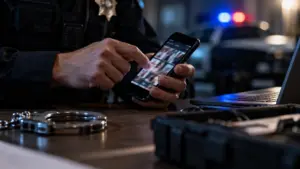
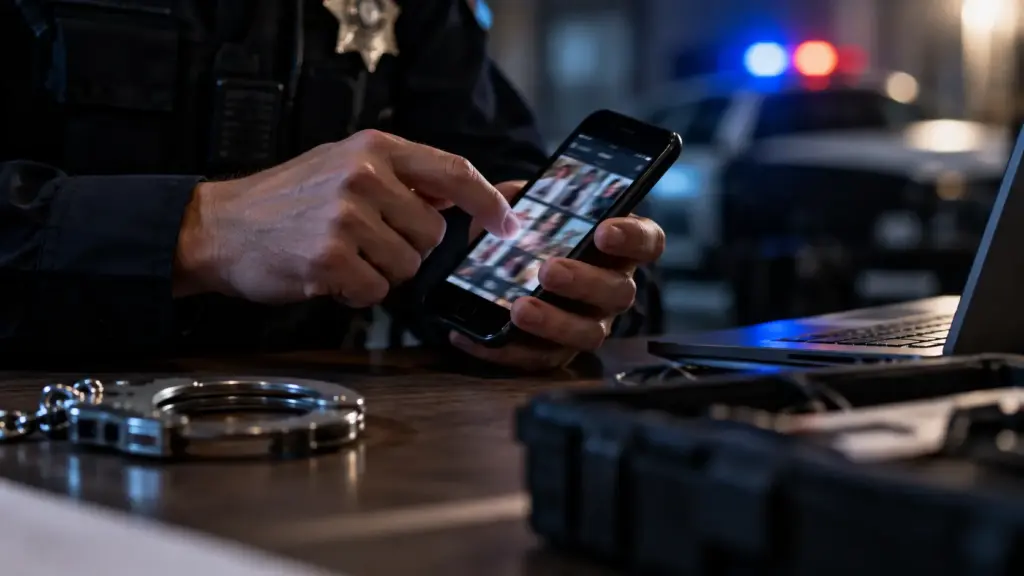
A police officer can have a suspect in custody, possess that person’s cellphone, and believe the device contains important evidence. None of those circumstances automatically gives the officer permission to search the phone’s digital contents.
That distinction became central to one of my most satisfying recent courtroom experiences.
I represented a client whose cellphone contained a private video involving him and his girlfriend. During the investigation, a Pennsylvania State Trooper made a statement that revealed remarkably specific knowledge of that recording.
There was one serious problem. The warrant authorizing a search of my client’s phone had not been obtained until four days later.
The trooper’s statement helped expose an unconstitutional search. Our challenge ultimately resulted in the suppression of important evidence.
The case demonstrates a critical principle of criminal defense: the government must establish not only what evidence it possesses, but also that the evidence was obtained in a manner consistent with the Constitution.
The Statement That Raised a Serious Constitutional Question
My client and his girlfriend had been arrested. As part of the investigation, law enforcement attempted to interview the girlfriend.
During that interview, she denied knowing my client.
The state trooper challenged her statement by referring to intimate conduct involving the couple at approximately 2:30 in the morning.
The specificity of that statement immediately raised a question.
How could the trooper know what the couple had been doing at that particular time?
As it turned out, my client’s cellphone contained a video documenting their intimate activity.
That explained how someone who had viewed the recording could possess such specific information. What it did not explain was how the trooper obtained that information lawfully.
The search warrant for my client’s phone was not issued until four days later.
That timeline mattered because the trooper’s earlier statement indicated that he already knew about material contained on the device.
The discrepancy became a critical part of the defense challenge.
Ultimately, important evidence was suppressed.
For me, the significance of the case extended beyond the particular recording or the trooper’s statement. It illustrated why defense attorneys must examine investigative conduct carefully, even when the government presents evidence as though its reliability and admissibility are beyond question.
Why the Timing of a Cellphone Search Matters
The Fourth Amendment to the United States Constitution protects people against unreasonable searches and seizures.
In criminal investigations, one of the most important questions is whether police had lawful authority to conduct a particular search at the time it occurred.
Consider the difference between two situations.
In the first, investigators establish probable cause, obtain a valid search warrant, and examine digital information within the warrant’s authorized scope.
In the second, an officer accesses private information before obtaining judicial authorization and subsequently receives a search warrant.
Those situations are not legally interchangeable.
A later warrant does not automatically validate an earlier unconstitutional search.
Courts must examine what officers did, when they did it, what legal authority existed at that moment, and whether the evidence ultimately offered by the prosecution was obtained through lawful means.
A Search Warrant Is Not Retroactive Permission
A warrant ordinarily represents judicial authorization to conduct a search based on a showing of probable cause.
The judge’s authorization matters because the warrant process places an independent judicial officer between law enforcement and the individual’s privacy interests.
Police officers cannot simply search first and assume that obtaining a warrant afterward will resolve any constitutional problem.
The law does recognize certain circumstances in which evidence discovered after an unlawful search may nevertheless be admissible. For example, the independent source doctrine can apply when evidence is subsequently obtained through a genuinely independent, lawful investigation.
Other doctrines, including inevitable discovery and attenuation, may also become relevant depending on the facts.
Those exceptions require legal analysis. Their application cannot be presumed merely because police eventually obtained a warrant.
In a case involving a questionable sequence of events, the defense must determine precisely how investigators obtained their information.
That includes examining whether the later warrant was genuinely independent of any earlier unlawful search.
What the Supreme Court Says About Searching Cellphones
The constitutional rules governing cellphone searches changed significantly in 2014, when the United States Supreme Court decided Riley v. California, 573 U.S. 373.
In that decision, the Court held that police generally must obtain a warrant before searching digital information on a cellphone seized during an arrest.
The Court recognized that modern phones contain an extraordinary amount of personal information.
A single device may hold photographs, videos, financial records, messages, medical information, location histories, and years of personal communications.
Searching that information creates privacy concerns that are substantially different from those associated with examining an ordinary physical object taken from a person’s pocket.
The Supreme Court’s decision in Riley v. California rejected the argument that the traditional authority to search a person incident to arrest generally permits officers to examine a cellphone’s digital contents without a warrant.
Police May Seize a Phone Without Being Allowed to Search Its Contents
This distinction is important.
An officer may have legal authority to take possession of a cellphone during an arrest. Officers may also take appropriate steps to secure a device while seeking judicial authorization.
However, possessing the phone and examining its private contents are different acts.
An arrest does not automatically authorize officers to browse through photographs, read messages, open applications, or review stored videos.
The government must establish lawful authority for the search itself.
Are There Exceptions to the Cellphone Warrant Requirement?
Yes. The warrant requirement is substantial, but it is not absolute.
Certain circumstances may permit a search without a warrant, including valid voluntary consent or sufficiently urgent circumstances that qualify as an exception to the Fourth Amendment’s ordinary requirements.
For example, an immediate threat to life or safety may present different legal questions from an ordinary investigation in which officers have secured a phone and have time to seek judicial authorization.
Whether an exception applies depends on the specific circumstances.
Police cannot rely on a generalized belief that a cellphone might contain useful evidence to bypass the warrant requirement.
How an Officer’s Own Statements Can Reveal an Improper Search
Criminal investigations generate substantial documentation.
Police reports, recorded interviews, warrant applications, property records, forensic reports, and testimony can all provide information about the government’s conduct.
Individual documents may appear consistent when viewed separately. Problems can become apparent when the defense compares them.
In my client’s case, the trooper’s statement was significant because of the specific information it revealed.
He referred to intimate activity involving my client and his girlfriend at approximately 2:30 in the morning.
A recording of that activity existed on my client’s cellphone.
Yet the warrant authorizing the cellphone search came four days later.
That raised a serious question about how and when law enforcement obtained knowledge of the recording.
An effective defense cannot stop at identifying a suspicious statement. Counsel must connect that statement to the relevant evidence and examine possible lawful explanations.
Was the information available from another source? Was consent given? Had another officer accessed the device? Did an exception to the warrant requirement exist?
The answers can affect whether a constitutional violation occurred and whether the resulting evidence may be admitted.
In this case, the challenge succeeded, and important evidence was suppressed.
Why Investigative Timelines Deserve Close Examination
Dates and times can carry enormous significance in criminal litigation.
A warrant application may identify when judicial authorization was requested or issued. An interview may reveal when an officer already possessed certain information. A forensic examination may document the timing and scope of access to digital evidence.
These records can help defense counsel test the government’s account.
For example, if an officer describes information from a phone during an interview that took place before a warrant was issued, that inconsistency deserves investigation.
It does not automatically establish every element necessary for suppression. The information may have come from another lawful source.
However, it creates a factual issue that defense counsel should not ignore.
One reason I scrutinize police reports, warrant records, and testimony is that seemingly minor discrepancies can reveal problems affecting the admissibility of important evidence.
How a Motion to Suppress Works in Pennsylvania
When evidence is believed to have been obtained in violation of a defendant’s rights, a criminal defense attorney may ask the court to exclude it.
That request is generally made through a motion to suppress.
Pennsylvania Rule of Criminal Procedure 581 establishes procedures for suppression motions in Pennsylvania criminal cases.
The rule requires the motion to identify the challenged evidence, explain the grounds for suppression, and state the supporting facts with particularity.
Under Pennsylvania Rule of Criminal Procedure 581, suppression issues ordinarily must be raised in an omnibus pretrial motion, subject to specified exceptions. The rule also addresses hearings, burdens of proof, and judicial findings.
What Happens During a Suppression Hearing?
A suppression hearing allows the court to examine the facts surrounding the challenged evidence.
Depending on the dispute, the hearing may involve testimony from officers, documentary evidence, warrant records, recorded interviews, or other materials relevant to the search.
Defense counsel may question the officers about their actions and compare their testimony with the available records.
For example, a defense attorney challenging a cellphone search may examine when the device was seized, when officers accessed its contents, when a warrant was obtained, and what the warrant authorized.
The judge evaluates the evidence and determines whether suppression is required.
Under Pennsylvania Rule 581, once the defendant properly challenges the evidence, the Commonwealth bears the burden of going forward and establishing that it was not obtained in violation of the defendant’s rights.
This is an important procedural safeguard.
The defense does not have to accept an officer’s conclusions about whether the investigation was lawful. The court can examine the underlying conduct.
Why Filing Deadlines Matter
Suppression claims are subject to procedural requirements.
A defendant who has grounds to challenge unlawfully obtained evidence may lose an opportunity to raise certain issues by failing to comply with applicable deadlines.
There are exceptions, but they should not be treated as a substitute for timely preparation.
For a broader discussion of why legal representation matters early in a prosecution, see PKN Law’s article explaining why contacting a criminal defense attorney promptly after being charged is important.
Early legal review allows counsel to identify potential constitutional issues while relevant records and testimony can still be investigated effectively.
Does Suppressed Evidence Mean Criminal Charges Will Be Dismissed?
Not necessarily.
This is one of the most common misunderstandings about suppression.
A successful motion to suppress can prevent the prosecution from using specific evidence. It does not automatically invalidate every charge or require dismissal of the entire case.
The effect depends on the significance of the excluded evidence and whether the prosecution has other admissible proof.
Suppose a criminal prosecution depends heavily on information obtained from a cellphone.
If that information is suppressed, the government may have difficulty establishing important elements of its case.
In another case, prosecutors may have independent witnesses, physical evidence, or other lawfully obtained records that permit the prosecution to continue.
The distinction matters because a successful constitutional challenge and the final disposition of criminal charges are separate questions.
In my client’s case, the unlawful search resulted in suppression of important evidence. That was a meaningful result, but it should not be understood as a promise that suppression in another case will necessarily produce a dismissal or acquittal.
Can Evidence Derived From an Illegal Search Also Be Suppressed?
Sometimes.
An unlawful search may lead investigators to additional evidence.
The legal question can then become whether that later evidence was obtained through exploitation of the original constitutional violation.
Courts examine the connection between the unlawful conduct and the subsequently discovered evidence.
The exclusionary rule and related doctrines may prevent the government from using certain evidence derived from an unconstitutional search. However, exceptions can apply.
The analysis may involve independent source, inevitable discovery, or attenuation principles.
This is another reason careful examination of the investigative timeline matters. The defense must understand not only how officers obtained the first piece of information, but also what investigative actions followed.
The Importance of Reviewing Digital Evidence Carefully
Cellphone evidence appears in many types of criminal prosecutions.
Text messages may be offered to establish an alleged agreement. Photographs may be used to connect someone to a location or another person. Location records may become relevant to the sequence of events. Videos may form part of the prosecution’s account of alleged conduct.
These records can be significant, but their existence does not resolve every factual or constitutional question.
Defense counsel may need to examine several distinct issues.
First, was the information obtained through a lawful search?
Second, does the evidence actually establish what prosecutors claim?
Third, can the government reliably connect the information to the accused person?
Fourth, are there questions involving completeness, authenticity, context, or interpretation?
An electronically stored record may appear persuasive when viewed in isolation but carry a different meaning when evaluated alongside other evidence.
These concerns can arise in Pennsylvania drug prosecutions, where investigators may rely on electronic communications to support allegations of possession, distribution, or conspiracy. PKN Law’s drug defense practice includes representation in state and federal narcotics matters.
Digital evidence also plays a substantial role in federal investigations. Electronic communications, seized devices, and forensic examinations may be important in prosecutions involving alleged fraud, firearms offenses, narcotics, and other federal crimes.
The firm’s federal criminal defense practice addresses serious federal charges that often require detailed examination of investigative records and government evidence.
Whether the case is in state or federal court, an attorney must distinguish between evidence that looks damaging and evidence that is actually lawful, reliable, and admissible.
How Police Conduct Interviews After an Arrest
The trooper’s statement in my client’s case occurred during an attempted interview with the girlfriend.
That circumstance also illustrates why defense attorneys review interviews carefully.
Statements made during questioning may reveal information about what officers knew, when they knew it, and how they developed their investigation.
The constitutional rules governing custodial interrogation are different from those governing cellphone searches.
The Fifth Amendment and Miranda principles concern certain protections against compelled self-incrimination during custodial questioning. The Fourth Amendment addresses unreasonable searches and seizures.
An investigation may raise issues under either or both provisions, but they require separate legal analysis.
For additional information about questioning following an arrest, PKN Law explains when police can ask questions after someone has been arrested.
In the cellphone case, the trooper’s statement was important because it suggested knowledge of private digital information before the warrant was issued.
The point was not simply what the trooper said. It was what his statement revealed about the investigation.
What Should You Do if You Believe Police Searched Your Phone Illegally?
If you are facing criminal charges and believe law enforcement accessed your cellphone without proper authorization, an attorney can help evaluate whether a constitutional challenge is available.
The relevant facts may include when police seized the phone, whether anyone consented to a search, when a warrant was issued, and how investigators obtained the information they later relied upon.
You do not need to resolve those questions yourself.
Preserve any relevant documents you already possess, including copies of warrants, property receipts, and other records provided during the investigation.
Do not delete, alter, or destroy potential evidence.
Avoid making assumptions about what officers were legally permitted to do. An officer’s possession of a phone does not necessarily establish authority to search its contents, but the absence of a warrant does not automatically resolve every constitutional issue either.
An experienced criminal defense attorney can evaluate the circumstances, obtain relevant discovery through appropriate procedures, and determine whether a motion to suppress is warranted.
The earlier these issues are identified, the more opportunity counsel may have to investigate them within the deadlines established by law.
Why Experience as Both a Prosecutor and Defense Attorney Matters
I have spent more than 24 years working in criminal law as both a prosecutor and a criminal defense attorney.
That background has shaped how I approach the government’s evidence.
As a former prosecutor, I understand the importance of building a case through testimony, documents, physical evidence, and investigative records.
As a defense attorney, I examine that same evidence from a different perspective.
I want to know whether the government’s factual assertions are supported, whether investigators followed the law, and whether the evidence can withstand meaningful scrutiny.
A search warrant does not eliminate the need to examine the investigation. A police report does not automatically establish that every statement is accurate. An officer’s testimony must still be evaluated alongside the available evidence.
In this case, the trooper’s knowledge of a private cellphone recording raised a question that proved critical to the defense.
The warrant came four days later.
That discrepancy exposed unconstitutional conduct and contributed to a successful suppression challenge.
These are the kinds of issues that require preparation, attention to detail, and familiarity with constitutional criminal procedure.
For more information about my professional background and approach to criminal representation, visit Patrick Nightingale’s attorney profile.
Protecting Your Rights When the Government Crosses the Line
A criminal charge does not eliminate a person’s constitutional protections.
Police officers must respect the limits placed on their investigative authority, including the restrictions governing searches of private digital information.
When those limits are exceeded, criminal defense counsel can ask the court to examine what happened and determine whether the resulting evidence should be excluded.
My client’s case is an example of why those protections matter.
A state trooper’s statement revealed knowledge of information on a cellphone before law enforcement obtained the warrant authorizing its search. Challenging that discrepancy led to the suppression of important evidence.
If you are facing criminal charges in Pittsburgh or elsewhere in Pennsylvania and have questions about how police obtained evidence against you, PKN Law can review your circumstances and discuss possible defense options.
To arrange a confidential consultation, visit the firm’s contact and consultation page or call (412) 454-5582.
This article provides general information about constitutional protections and criminal procedure. It is not legal advice for any particular situation. Case outcomes depend on their specific facts, applicable law, and judicial rulings. Prior results do not guarantee a similar outcome.
Police generally need a warrant to search the digital contents of a cellphone seized during an arrest. In Pennsylvania, an unlawful cellphone search may provide grounds for a motion to suppress evidence. Courts examine when the search occurred, whether an exception applied, and whether the challenged evidence was obtained through unconstitutional conduct.
Frequently Asked Questions
1. Can Pennsylvania police search my cellphone without a warrant?
Police generally need a valid search warrant to examine the digital contents of a cellphone seized during an arrest. Limited exceptions, such as voluntary consent or exigent circumstances, may apply.
2. Can police obtain a search warrant after they already searched my phone?
Police may obtain a warrant afterward, but that warrant does not automatically authorize an earlier search. Courts examine the timing, circumstances, and any applicable legal exceptions.
3. What happens if police illegally search my cellphone?
A criminal defense attorney may file a motion to suppress evidence obtained through an unconstitutional search. If the motion succeeds, the prosecution may be prohibited from using the excluded evidence.
4. Does a successful motion to suppress mean my charges will be dismissed?
Not necessarily. Suppression excludes particular evidence but does not automatically dismiss criminal charges. The prosecution may continue if sufficient admissible evidence remains.
5. Can police search photographs and videos on my phone after arresting me?
An arrest alone generally does not authorize officers to search stored photographs or videos. The same constitutional protections that apply to other digital information also apply to private images.
6. Can an officer search my phone if I give permission?
Voluntary consent can provide a lawful basis for a search without a warrant. Whether consent was valid, who provided it, and the scope of the permission may become important legal questions.
7. How can a criminal defense attorney prove a cellphone search occurred before a warrant was issued?
Defense counsel may examine officer statements, recorded interviews, warrant records, investigative reports, and available forensic evidence. Comparing the sequence of events can reveal inconsistencies that warrant further investigation.
8. How long do I have to challenge an illegal search in Pennsylvania?
Pennsylvania Rule of Criminal Procedure 581 ordinarily requires suppression issues to be raised through an omnibus pretrial motion, subject to exceptions. The applicable deadline depends on the procedural circumstances, making timely legal review important.