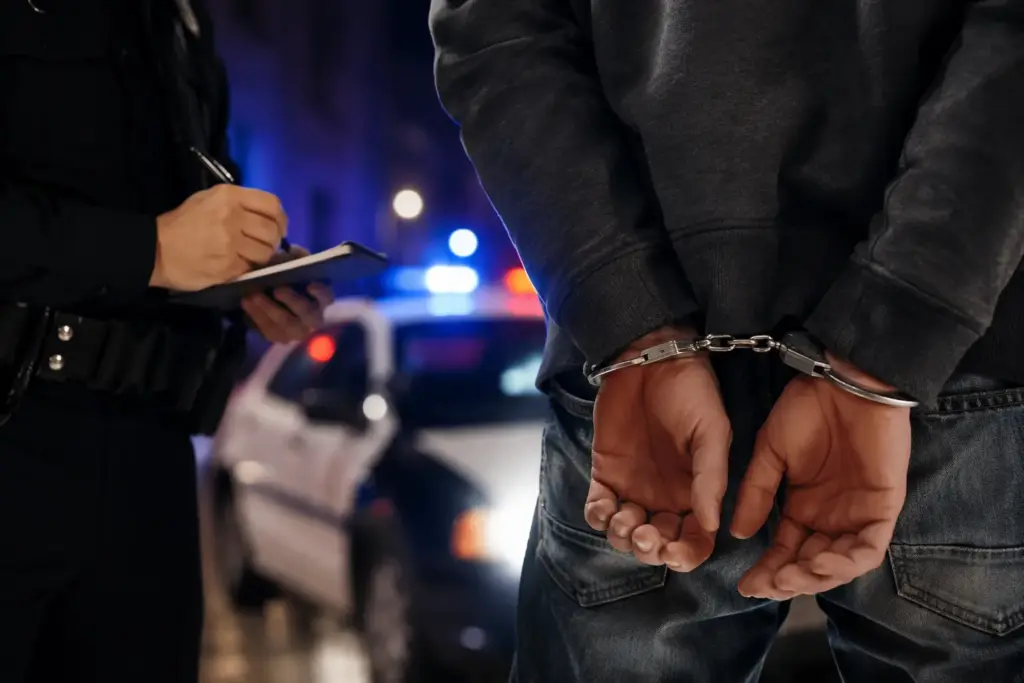
Many people believe that once they are arrested, police cannot ask them any questions unless they first read Miranda warnings. That is not exactly how the law works. Police can ask some questions after an arrest. What matters is the type of question, the purpose of the questioning, and whether police are trying to get incriminating information without first advising a person of their rights.
If you are looking for the short answer, here it is. Yes, police can ask certain routine questions after an arrest.
No, police cannot question you about alleged criminal conduct in a way that is designed to elicit incriminating answers without first complying with the constitutional rules that protect your right to remain silent. That distinction can make a major difference in a criminal case.
I have spent more than 24 years handling criminal cases from both sides of the courtroom, first as a prosecutor and now as a criminal defense attorney. One thing I have learned is that many people talk to police because they think they can clear things up. In reality, statements made during or after an arrest often become some of the most damaging evidence in the case.
What Does the Fifth Amendment Protect?
The Fifth Amendment protects you from being compelled to incriminate yourself. In plain language, that means the government cannot force you to provide evidence against yourself through your own statements.
This protection is closely connected to Miranda v. Arizona, the United States Supreme Court case that requires police to advise certain people of their rights before custodial interrogation. Those rights include the following:
- You have the right to remain silent.
- Anything you say can be used against you in court.
- You have the right to an attorney.
- If you cannot afford an attorney, one may be appointed for you.
These rights are familiar to many people because they are often mentioned in television shows and movies. What is less familiar is how courts actually apply them in real criminal cases.
When Are Miranda Warnings Required?
Miranda warnings are generally required when both of these things are true:
- You are in custody.
- You are being interrogated.
Both parts matter. Custody usually means you are not free to leave in a way that resembles formal arrest or its equivalent. Interrogation generally means police questioning or conduct that is reasonably likely to elicit an incriminating response.
This is where confusion often begins. Many people assume that any question asked by police after an arrest is automatically improper if Miranda warnings have not yet been given. That is not the rule. Courts recognize that some questions are administrative and routine. Other questions are investigative and designed to build evidence.
Can Police Ask Routine Questions After an Arrest?
Yes. Police are generally allowed to ask routine booking or biographical questions after an arrest. These questions are usually not treated as interrogation because they are not primarily designed to obtain incriminating information about the alleged offense.
Examples of routine questions may include the following:
- What is your full name?
- What is your date of birth?
- What is your address?
- Where do you live?
- What is your employment?
- Who should be contacted in case of emergency?
In many cases, courts treat these questions as part of the normal administrative process after an arrest. That said, context matters. A question that looks routine on paper may become problematic depending on the charges and the facts of the case. For example, a question about where you live may seem basic, but in a narcotics case, gun case, or conspiracy case, that answer may be directly tied to possession, access, or control. The same is true for questions about who lives with you or who owns certain property.
The law does not just look at the wording of a question. It also looks at whether the question was likely to produce incriminating information.
What Police Cannot Do Without Proper Warnings
Police cannot use questioning to get incriminating statements about the alleged offense without first complying with Miranda when a person is in custody.
That includes direct questions about the accusation, such as the following:
- Were the drugs yours?
- Did you know the gun was in the car?
- Why did you hit that person?
- Where were you before the robbery?
- Who else was with you?
It can also include less direct tactics. Interrogation is not limited to obvious questions. Sometimes police make statements or create situations that are reasonably likely to prompt a person to explain, deny, or admit something. Courts may still treat that as interrogation.
That is why these cases require close review. Police reports do not always tell the full story. Body camera video, audio recordings, booking room footage, dispatch records, and witness testimony can all matter when deciding whether a constitutional violation occurred.
Why This Distinction Matters in Real Cases
Statements can be powerful evidence. Prosecutors often use them to argue guilt, consciousness of guilt, knowledge, intent, possession, or credibility. Even a short statement can become a major issue in court.
For example, a person may think they are helping themselves by explaining where they were, who they were with, or why they were present. Later, those same statements may be used to place them at the scene, connect them to other people, or create inconsistencies that prosecutors argue show dishonesty.
That is one reason I tell people to be very careful. Many cases become harder to defend because a person spoke too freely before understanding the consequences.
What Happens If Police Violate Miranda?
A Miranda violation does not automatically make the whole case disappear. That is another common misconception. In most cases, the remedy is that the defense can ask the court to suppress the statement, meaning the prosecution may be prevented from using it as evidence.
A motion to suppress may be filed when statements were obtained in violation of a person’s constitutional rights. During a suppression hearing, the court may consider the following:
- Whether the person was in custody
- Whether police engaged in interrogation
- Whether Miranda warnings were given
- Whether the person knowingly and voluntarily waived their rights
- Whether questioning continued after the person invoked the right to remain silent
- Whether the person asked for a lawyer
- Whether the statement was voluntary under the totality of the circumstances
If the judge agrees that the statement was obtained unlawfully, the prosecution may lose an important piece of evidence.
Can Statements Be Challenged for Reasons Other Than Miranda?
Yes. A statement may be challenged for more than one reason. Miranda is important, but it is not the only issue.
Other possible grounds for challenging a statement can include the following:
- The statement was involuntary.
- Police used coercion, threats, or improper pressure.
- The person did not validly waive their rights.
- Police continued questioning after the person invoked the right to remain silent.
- Police continued questioning after the person requested an attorney.
- The statement was obtained during an unlawful detention or arrest.
These issues are highly fact specific. Small details can change the analysis. That is why an early review of the evidence matters.
What Should You Do If Police Want to Question You?
If police want to question you about alleged criminal conduct, the safest course is simple:
- Remain silent.
- Clearly state that you want a lawyer.
- Do not try to explain.
- Do not try to talk your way out of the situation.
- Do not assume that cooperation will help.
- Do not guess, speculate, or fill in gaps.
- Do not rely on the belief that the truth will sort everything out.
People often think silence makes them look guilty. That is not the legal standard. Your constitutional rights exist for a reason. Using them is not an admission of guilt. It is the exercise of a protection the Constitution gives you.
Why Early Legal Review Matters
The earlier a defense lawyer reviews a statement issue, the better. Timing matters. Evidence can be preserved, recordings can be requested, and legal arguments can be developed before the prosecution fully shapes the narrative.
In cases involving police questioning, I often want to examine the following:
- Police reports
- Body camera footage
- Dash camera footage
- Audio recordings
- Booking room video
- Dispatch logs
- Written statements
- Text messages or digital evidence connected to the questioning
- The exact timeline of arrest, transport, warnings, and questioning
This kind of review can uncover inconsistencies, omissions, and constitutional issues that may not be obvious from a police report alone.
Common Misunderstandings About Police Questioning
Several misunderstandings come up again and again.
First, many people believe police can never ask questions after an arrest. That is false. Some routine questions may be allowed.
Second, many people believe that if Miranda warnings were not read, the charges automatically get dismissed. That is also false. The issue is usually whether a statement can be used as evidence.
Third, many people believe they can talk their way out of a case. In my experience, that belief often makes matters worse. Even truthful statements can be misunderstood, taken out of context, or used selectively.
Fourth, many people believe that if they already answered a few questions, there is no point in getting a lawyer. That is not true. Statements may still be challenged, and the sooner the case is reviewed, the better.
Why This Matters in Pennsylvania Criminal Cases
In Pennsylvania state cases and federal cases alike, statements to law enforcement can shape everything that follows. They can affect charging decisions, plea negotiations, pretrial motions, trial strategy, and sentencing arguments.
If the prosecution has a statement, the defense must examine how it was obtained and whether it should be admitted at all. These are not technical arguments. They are constitutional protections that keep government power within legal limits.
As a defense attorney, I take that responsibility seriously. I look closely at custody, interrogation, warnings, waiver, voluntariness, and the full context of the encounter. Every word matters.
If you are searching for whether police can ask questions after an arrest, here is the practical answer. Police can ask routine booking questions after an arrest. Police generally cannot question you about the alleged crime in a custodial setting without first advising you of your Miranda rights. If they do, your statements may be challenged and possibly suppressed.
That answer is general, not case specific. The facts of each case matter.
Frequently Asked Questions
Can police ask questions after an arrest?
Yes. Police can ask certain routine booking and biographical questions after an arrest. What they generally cannot do is question you about the alleged offense in a custodial setting without first complying with Miranda.
What are routine booking questions?
Routine booking questions are usually basic administrative questions, such as:
- Your name
- Your date of birth
- Your address
- Your employment
- Emergency contact information
Whether a question is truly routine can depend on the facts of the case.
Do police have to read Miranda rights immediately after an arrest?
No. Miranda warnings are required before custodial interrogation, not necessarily at the exact moment of arrest. That is why police may still ask some routine questions without first giving the warnings.
Can my case be dismissed if police violated Miranda?
Not automatically. A Miranda violation usually leads to an argument that the statement should be suppressed, meaning it cannot be used as evidence. Whether that changes the outcome of the case depends on the other evidence and the facts of the prosecution.
Should I answer police questions if I know I did nothing wrong?
No. Innocent people can still make damaging statements. The safest approach is to remain silent and ask for a lawyer.
Can police ask who I live with?
Sometimes they can, especially during booking or administrative processing. However, in some cases that question may have incriminating significance depending on the charges. Context matters.
What should I say if police want to question me?
You should clearly state:
- I want to remain silent.
- I want a lawyer.
After that, stop answering questions about the alleged offense.
Police can ask some questions after an arrest, but they do not have unlimited power to question you. The Fifth Amendment still protects your right against self incrimination. Miranda still matters. The difference between a routine administrative question and an incriminating interrogation can determine whether a statement is used in court.
If you made statements to law enforcement, do not assume police acted properly and do not assume the case cannot be challenged. A careful legal review may reveal important opportunities to protect your rights.
If you have questions about statements made to law enforcement or whether your rights were violated, schedule a consultation through patricknightingale.com or call (412) 454-5582.