
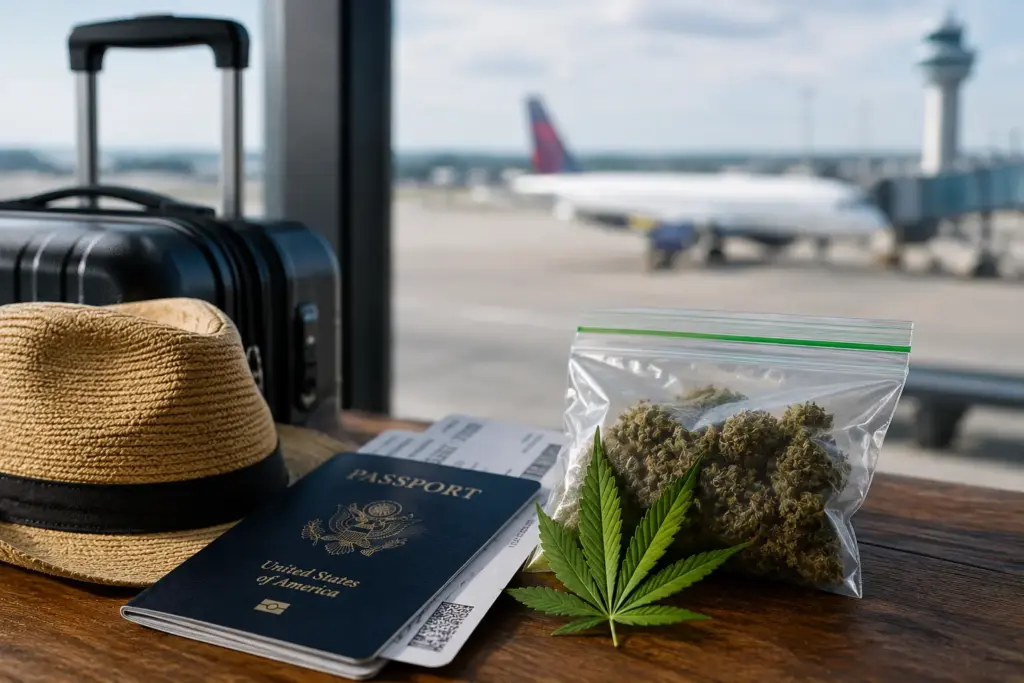
Pennsylvania’s medical marijuana program has helped many patients lawfully access cannabis for serious medical conditions. For people dealing with chronic pain, anxiety disorders, cancer related symptoms, neurological conditions, and other qualifying health concerns, the program can provide relief through a regulated medical system.
However, Pennsylvania’s medical marijuana law has limits. A patient identification card does not make every cannabis product legal to possess. It also does not give a patient permission to bring cannabis products into Pennsylvania from another state.
This is one of the most common misunderstandings medical marijuana patients face. A Pennsylvania patient may travel to another state, use a Pennsylvania medical marijuana identification card, or purchase cannabis in a state where adult use cannabis is legal. The purchase may seem lawful at the time. The problem begins when that product is brought back into Pennsylvania.
Pennsylvania patients should understand one important point clearly: cannabis purchased outside Pennsylvania can still create criminal exposure once it is brought back into the Commonwealth.
Pennsylvania medical marijuana patients should not assume they can lawfully bring cannabis products back from another state.
Even if another state allows a Pennsylvania patient to purchase cannabis, Pennsylvania law may not protect possession of that product after the patient returns home. Pennsylvania’s medical marijuana program is built around Pennsylvania patient registration, Pennsylvania practitioner certification, and products obtained through Pennsylvania dispensaries.
If the product was purchased outside Pennsylvania, police and prosecutors may treat it as unlawful possession.
Why Pennsylvania’s Medical Marijuana Rules Are So Specific
Pennsylvania has a medical marijuana program, not full adult use legalization. That distinction is important.
The program is regulated through the Pennsylvania Department of Health. Patients must have a qualifying serious medical condition, receive certification from an approved practitioner, register with the program, and obtain a valid medical marijuana identification card. The Pennsylvania Department of Health states that patients use that card to obtain medical marijuana at Pennsylvania dispensaries.
That system is narrow by design. It does not simply legalize cannabis possession for anyone with a medical need. It creates a regulated path for patients to obtain medical marijuana from approved Pennsylvania sources.
This means the source of the product matters.
A patient who purchases medical marijuana from a Pennsylvania dispensary is operating within the state program. A patient who purchases cannabis in another state and brings it back to Pennsylvania may be outside that protection, even if the patient has a valid Pennsylvania medical marijuana card.
The Out of State Cannabis Problem
Cannabis laws change from state to state. Some states allow adult use cannabis. Some states recognize out of state medical marijuana cards in limited situations. Other states allow visiting patients to purchase cannabis under their own rules.
That can create confusion for Pennsylvania patients.
For example, a Pennsylvania patient may visit another state and be allowed to purchase cannabis there. The patient may believe that because the purchase was permitted in that state, the product is also lawful to possess in Pennsylvania. That is not a safe assumption.
Pennsylvania does not automatically recognize cannabis products purchased elsewhere as lawful Pennsylvania medical marijuana. Once the product is brought back into Pennsylvania, the patient may still face a marijuana possession charge.
In many cases, the issue is not whether the person is truly a patient. The issue is whether the product was obtained and possessed in a way that complies with Pennsylvania law.
A Medical Marijuana Card Is Important, But It Is Not Unlimited
A Pennsylvania medical marijuana card can be very important. It may help explain why a person possessed cannabis. It may provide protection when the patient follows the rules of the Pennsylvania program. It may also be a key part of a defense if charges are filed.
However, a medical marijuana card is not a complete shield against every marijuana related charge.
Pennsylvania law allows a permitted dispensary to dispense medical marijuana to a patient or caregiver who presents a valid identification card. The law also requires the dispensary to provide a receipt for the transaction.
That receipt and packaging can matter. They may help show that the product came from within Pennsylvania’s regulated system. Products purchased in another state may not carry the same protection.
Patients should also understand that medical marijuana cannot be shared freely. Pennsylvania law provides penalties when a patient or caregiver intentionally, knowingly, or recklessly provides medical marijuana to someone who is not lawfully permitted to receive it.
The law protects patients only when they stay within the boundaries of the program.
Common Situations That Can Lead to Criminal Charges
Many medical marijuana cases begin with ordinary events. A person may not expect to be investigated. A simple traffic stop, travel issue, or misunderstanding can quickly become a criminal case.
Common situations include:
- A Pennsylvania patient purchases cannabis in another state and brings it home.
- A patient is stopped while driving and has out of state cannabis packaging in the vehicle.
- A patient assumes cannabis purchased legally elsewhere is legal in Pennsylvania.
- A patient shares medical marijuana with a friend or family member.
- A patient has cannabis in a vehicle during a police stop.
- A patient is on probation or parole and does not understand how marijuana possession may affect supervision.
- A patient has a firearm and marijuana in the same vehicle or home.
- A patient is accused of driving under the influence after lawful medical marijuana use.
These cases can become complicated because several legal issues may overlap. Police may investigate possession. They may question where the product came from. They may ask whether the patient is impaired. They may also look for evidence of distribution, especially if there are multiple packages, large quantities, cash, scales, or messages suggesting sales.
A patient may have a valid medical reason for using marijuana and still be placed in a difficult legal position.
Why Vehicle Stops Are Especially Risky
Vehicle stops are one of the most common ways marijuana related charges begin in Pennsylvania.
An officer may stop a driver for speeding, an expired registration, a broken light, or another traffic issue. During the stop, the officer may claim to smell marijuana or see cannabis packaging. The driver may explain that they have a Pennsylvania medical marijuana card.
That explanation does not always end the encounter.
The officer may ask where the product was purchased. The officer may ask whether the driver used marijuana recently. The officer may ask to search the vehicle. The officer may look at the packaging and determine that the product came from another state.
At that point, the patient may be facing more than a traffic ticket.
Medical marijuana can also create concerns in driving under the influence cases. A patient can be lawfully registered and still be accused of driving while impaired. These cases require careful review of the stop, the officer’s observations, chemical testing, medical marijuana status, and whether the prosecution can actually prove impairment or unlawful possession.
Patients should be respectful during police encounters, but they should also understand that their words can become evidence. An attempt to explain the situation may accidentally confirm facts that help the prosecution.
Why Product Source Matters
In a Pennsylvania medical marijuana case, the product source may be one of the most important facts.
Police and prosecutors may look at:
- Whether the product came from a Pennsylvania dispensary.
- Whether the patient had a valid Pennsylvania medical marijuana identification card.
- Whether the packaging matches Pennsylvania dispensary products.
- Whether there is a dispensary receipt.
- Whether the product was purchased by the patient or by a lawful caregiver.
- Whether the amount is consistent with personal medical use.
- Whether there is any evidence that the product was shared, sold, or transferred.
For out of state cannabis products, prosecutors may argue that the patient was not protected by Pennsylvania’s medical marijuana program. That does not mean the case cannot be defended. It means the details matter.
A strong defense may involve challenging the legality of the traffic stop, the search, the seizure, the identification of the substance, or the prosecution’s ability to prove possession. In some cases, the patient’s medical marijuana status may still be relevant to negotiations, diversion options, or the overall defense strategy.
Why Patients Should Avoid Explaining Too Much to Police
Many people want to talk their way out of a criminal charge. That is understandable. A medical marijuana patient may feel that if they simply explain the situation, the officer will understand.
Unfortunately, that is not always how criminal cases work.
A patient might say:
- I bought it legally in another state.
- I brought it back because I am a medical patient.
- I did not know it was illegal.
- It is mine, not anyone else’s.
- I used it earlier, but I am not impaired.
Those statements may be honest, but they can still be used as evidence. They may confirm ownership, transportation, timing of use, or the fact that the product crossed state lines.
Patients should not argue with police. They should not provide false information. They should also avoid making detailed statements about cannabis possession, travel, purchases, or use before speaking with an attorney.
Respectful silence can be important. Legal guidance can make a significant difference.
What To Do If You Are Charged in Pennsylvania
If you are charged with marijuana possession or another drug offense in Pennsylvania, do not assume the case will disappear because you have a medical marijuana card.
The card may matter. It may help. It may become part of the defense. It may not be enough by itself.
The first step is to have the case reviewed by an experienced criminal defense attorney. Important questions may include:
- Was the traffic stop lawful?
- Did police have legal grounds to search the person, vehicle, or property?
- Was the product actually marijuana under Pennsylvania law?
- Can the prosecution prove possession?
- Was the patient validly registered at the time?
- Did the product come from a Pennsylvania dispensary?
- Were any statements made that need to be challenged?
- Is there a path to dismissal, reduction, diversion, or another favorable resolution?
Every case is different. The facts matter. The court matters. The prosecutor matters. The client’s record, employment, licensing, probation status, and personal circumstances may all affect the defense strategy.
Why Experience Matters in Medical Marijuana Criminal Cases
Medical marijuana cases require more than a basic understanding of drug possession law. They often involve overlapping issues, including search and seizure, Pennsylvania’s medical marijuana program, vehicle stops, driving under the influence allegations, probation concerns, and sometimes firearm related consequences.
Patrick Nightingale brings more than 24 years of criminal law experience to these cases. His background as both a former prosecutor and a criminal defense attorney gives him valuable insight into how the government reviews evidence and builds a case.
That experience matters when a client is facing a charge based on confusion, misunderstanding, or a mistake involving Pennsylvania’s medical marijuana rules.
A criminal charge can be frightening. It can threaten a person’s job, record, family, license, reputation, and future. Clients deserve a defense attorney who takes the facts seriously, listens carefully, and knows how to hold the prosecution to its burden.
Guidance for Patients in Pittsburgh and Western Pennsylvania
Patients in Pittsburgh, Allegheny County, and throughout Western Pennsylvania should be especially careful when traveling. Pennsylvania borders states with different cannabis laws, and many residents regularly travel for work, family, recreation, or medical care.
A product that was purchased legally in another state may still become a legal problem after returning to Pennsylvania.
The safest approach is to stay within Pennsylvania’s medical marijuana program. Patients should use Pennsylvania dispensaries, keep their identification card current, keep products in proper packaging, and avoid transporting cannabis across state lines.
Patients should also be careful when driving. Even lawful medical marijuana use can lead to legal scrutiny if police believe a driver is impaired or if cannabis products are found during a stop.
When there is uncertainty, it is better to ask questions before a legal problem begins. Once charges are filed, the situation becomes more serious and more stressful.
Patient Takeaway
Pennsylvania medical marijuana patients should remember that the law is specific. A patient identification card provides important protection, but only when the patient follows the rules of the Pennsylvania program.
Out of state cannabis products can create criminal exposure in Pennsylvania. Patients should not assume that a lawful purchase elsewhere is automatically lawful here.
If you are facing a marijuana possession charge, a drug offense, or a driving under the influence allegation involving medical marijuana, speak with an experienced criminal defense attorney before making statements or assuming the charge is minor.
PKN Law Can Help
Medical marijuana laws can be confusing, especially when travel and out of state purchases are involved. Many patients charged with marijuana related offenses are not trying to break the law. They are trying to manage a medical condition and may not realize how narrow Pennsylvania’s protections can be.
That misunderstanding should not define the rest of your life.
Patrick Nightingale and PKN Law help clients facing drug charges, marijuana possession allegations, driving under the influence charges, firearm related issues, and other criminal matters in Pennsylvania state and federal courts.
To schedule a consultation, visit patricknightingale.com or call (412) 454-5582.
Frequently Asked Questions
Can I bring medical marijuana purchased in another state back to Pennsylvania?
No Pennsylvania patient should assume this is lawful. Even if another state allows the purchase, bringing cannabis products back into Pennsylvania can still create criminal exposure.
Does my Pennsylvania medical marijuana card protect me from all marijuana charges?
No. A Pennsylvania medical marijuana card can provide important protection when the patient follows Pennsylvania’s rules. It does not protect every product, every purchase, or every situation.
Can I buy cannabis in another state if that state accepts my Pennsylvania medical marijuana card?
Another state may have its own rules about whether visiting patients can purchase cannabis. That does not mean Pennsylvania will treat the product as lawful once it is brought back into the Commonwealth.
Can I share my medical marijuana with another person?
No. Patients should not share medical marijuana with another person unless that person is legally permitted to receive it under the law. Sharing medical marijuana can create criminal consequences.
Can I be charged after a traffic stop if I have a medical marijuana card?
Yes. A medical marijuana card does not prevent every investigation or charge. Police may still investigate possession, impairment, product source, and other facts.
What should I do if police ask where my cannabis came from?
Be respectful, but do not make detailed statements about purchases, travel, possession, or use before speaking with an attorney. Statements made during a police encounter can become evidence.
What should I do if I am charged with marijuana possession in Pennsylvania?
Speak with an experienced criminal defense attorney as soon as possible. The legality of the stop, the search, the product source, and your medical marijuana status may all affect the defense.