A driving under the influence charge can begin with a decision made hours before a police officer activates emergency lights. Someone attends a dinner, takes prescribed medication, uses medical marijuana, or assumes that enough time has passed since the last drink. That person may feel capable of driving without recognizing how alcohol or another substance has affected judgment, coordination, or reaction time.
The most reliable way to avoid a driving under the influence charge is also the most important public safety rule: do not drive, operate, or remain in actual physical control of a vehicle when alcohol, a controlled substance, medication, or a combination of substances may have impaired you.
Practical preparation still matters. Many Pennsylvania driving under the influence investigations begin with an alleged moving violation, a vehicle equipment problem, a crash, or a report from another motorist. Planning transportation in advance, following traffic laws, and maintaining the vehicle can reduce preventable risks. None of those precautions makes impaired driving safe or lawful, but each can help drivers make more responsible decisions before a problem develops.
Pennsylvania DUI Law Covers More Than Drunk Driving
Pennsylvania’s driving under the influence statute is broader than many drivers realize. Under Section 3802 of the Pennsylvania Vehicle Code, a person may not drive, operate, or be in actual physical control of a vehicle after consuming enough alcohol to make the person incapable of safely driving.
The statute also establishes alcohol concentration offenses and addresses controlled substances, certain prescription medications, combinations of drugs and alcohol, and other substances that may affect the ability to operate a vehicle safely.
This creates several common misunderstandings.
A driver does not necessarily avoid legal risk simply because the driver believes the blood alcohol concentration is below 0.08 percent. Pennsylvania law includes a general impairment provision that focuses on whether alcohol made the person incapable of safe driving.
Likewise, a substance does not need to be illegally obtained to become part of a driving under the influence investigation. A valid prescription or medical marijuana authorization does not automatically establish that a person was safe to drive.
The practical question is not limited to whether a substance was legal to possess. The immediate question is whether the person can drive safely and whether Pennsylvania law prohibits driving with that substance or its metabolites in the body under the circumstances.
Make the Transportation Decision Before Drinking
People are often least able to evaluate their own driving ability after they have consumed alcohol. Alcohol may affect judgment before the person recognizes obvious physical signs of intoxication. Waiting until the end of an evening to decide whether to drive places an important safety decision in the hands of someone whose decision-making ability may already be affected.
A better approach is to decide how everyone will get home before alcohol is served.
A transportation plan may include a designated sober driver, public transportation, a taxi, a rideshare service, overnight accommodations, or a ride from a trusted friend or relative. The plan should account for the possibility that the designated driver may later decide to drink.
It is also wise to consider what will happen to the vehicle. Some people drive because they are worried about leaving a car overnight, receiving a parking ticket, or returning for it the next day. Those inconveniences are generally far less serious than the possible consequences of a crash, an arrest, or a driving under the influence prosecution.
Coffee, food, a cold shower, fresh air, or a short rest should not be treated as reliable methods of becoming sober. Only time allows the body to eliminate alcohol, and the rate varies among individuals. A person who still has doubts should not drive.
Remember That Prescription Medication May Affect Driving
Prescription medication is another significant source of driving risk. Some medications can cause drowsiness, confusion, dizziness, blurred vision, slowed reactions, or problems with coordination. Over-the-counter products, including some sleep aids, cold medicines, and allergy medications, may produce similar effects.
Drivers should read medication labels and follow instructions provided by physicians and pharmacists. A person beginning a new medication may not know how strongly it will affect alertness or coordination until after taking it.
Combining substances creates additional uncertainty. Alcohol may intensify the sedating effects of certain medications. Multiple prescribed medications may interact with one another. Cannabis combined with alcohol may affect a person differently than either substance alone.
A prescription is not a general defense to impaired driving. Pennsylvania’s statute contains provisions addressing controlled substances that were medically prescribed when the substance impairs the person’s ability to drive safely. Anyone who is unsure whether a medication is compatible with driving should seek guidance from the prescribing professional or pharmacist before operating a vehicle.
Medical Marijuana Patients Face Distinct Pennsylvania Risks
Pennsylvania permits qualified patients to use medical marijuana, but medical authorization does not eliminate driving under the influence exposure. The relationship between lawful medical use and Pennsylvania’s controlled substance driving provisions remains especially difficult for patients because cannabis compounds and metabolites may remain detectable after the noticeable effects have diminished.
PKN Law has addressed these issues in its discussion of Pennsylvania’s medical cannabis driving under the influence risks. Patients should understand that possession through the medical marijuana program and lawful operation of a motor vehicle are separate legal questions.
A patient should not drive while feeling impaired, sedated, disoriented, or otherwise affected by medical marijuana. The patient should also follow medical guidance concerning timing, dosage, and potential interactions with other substances.
Cannabis cases may involve legal and scientific questions that differ from alcohol cases. Officer observations, the reason for the stop, the timing of use, the timing of a blood draw, laboratory findings, medical authorization, and evidence of actual driving behavior may all require careful review.
Obey Traffic Laws Every Time You Drive
Many driving under the influence investigations begin with an alleged traffic violation rather than an officer’s immediate observation of obvious impairment.
Common reasons for traffic stops may include:
- Speeding
- Failing to stop at a stop sign
- Driving through a red light
- Failing to signal a turn or lane change
- Drifting across lane markings
- Following another vehicle too closely
- Making an improper turn
- Driving without required lights
- Using a handheld mobile device in violation of applicable law
Under Section 6308 of the Pennsylvania Vehicle Code, an officer may stop a vehicle when the officer has reasonable suspicion that a Vehicle Code violation is occurring or has occurred, subject to the legal requirements that apply to the particular investigation.
Once a stop occurs, the officer may observe the driver’s appearance, speech, movements, responses, and behavior. The officer may also note odors, containers inside the vehicle, statements about drinking or drug use, and the driver’s performance when producing a license, registration, or insurance information.
Obeying traffic laws does not provide immunity from a stop. It also should never be viewed as a technique for concealing impairment. It is simply part of safe, lawful driving and may prevent an avoidable encounter based on an alleged moving violation.
Drivers who want to understand how the legal basis for a stop may affect a case can read PKN Law’s separate explanation, Was Your DUI Stop Legal?.
Check the Vehicle’s Lights and Equipment
A vehicle does not need to be speeding or weaving for an officer to initiate a traffic stop. An alleged equipment violation may provide the initial basis for the encounter.
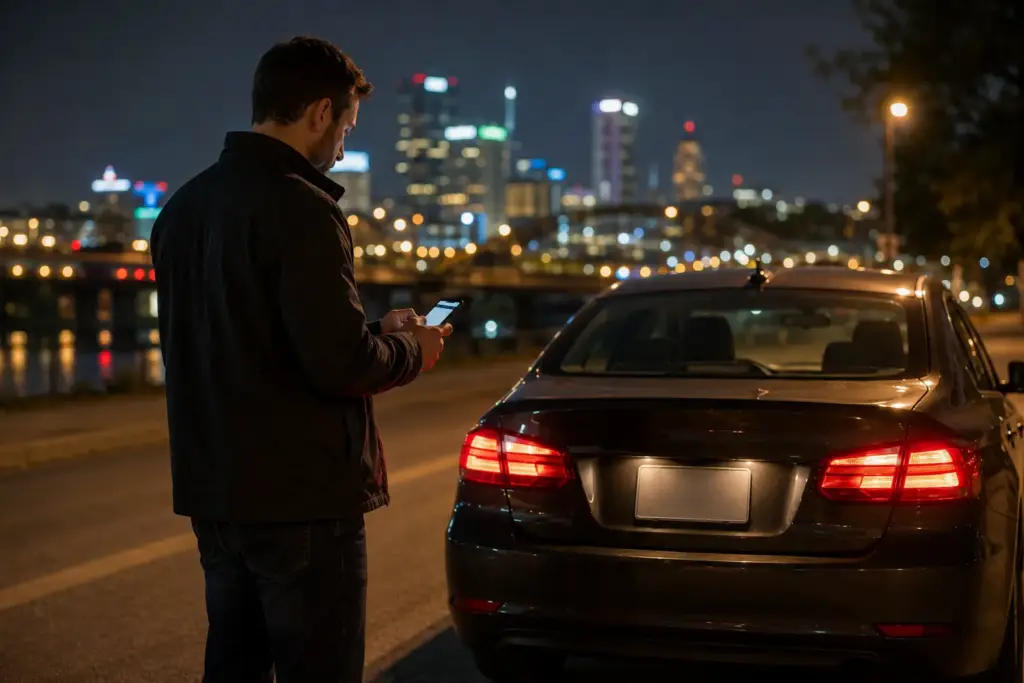
Pennsylvania law requires vehicles operated on highways to have specified lighting equipment. Section 4303 of the Pennsylvania Vehicle Code addresses rear lighting systems, including rear lamps, stop lamps, reflectors, and lighting for the registration plate.
A driver may not notice a failed taillight or license plate bulb from inside the vehicle. For that reason, vehicle lighting should be checked periodically rather than only at the time of an annual inspection.
Ask another person to stand outside the vehicle while the headlights, taillights, brake lights, turn signals, hazard lights, and reverse lights are tested. Check that the registration plate is visible, properly attached, and illuminated as required. Windshield wipers, tires, mirrors, and other safety equipment should also be kept in proper condition.
The Pennsylvania Department of Transportation provides information about vehicle inspection and safety requirements through its Driver and Vehicle Services resources. Drivers can also use PennDOT’s online vehicle services to access registration renewal and other available services.
Regular maintenance supports roadway safety. It may also prevent an equipment violation from becoming the reason for a traffic stop.
Keep Inspection, Registration, Insurance, and License Information Current
Administrative issues can create their own legal and practical problems. A driver should confirm that the vehicle registration and inspection are current, that required insurance coverage remains active, and that the driver’s license is valid.
Registration and insurance documents should be stored in a place where they can be reached without searching through the vehicle for several minutes. Digital records may be useful where accepted, but drivers should understand how to access them without handling a phone unlawfully while driving.
A driver who recently moved should update the address associated with licensing and vehicle records as required. Renewal notices do not always reach people who have outdated contact information.
These steps do not determine whether someone is impaired. They simply reduce avoidable complications during a traffic encounter and help drivers comply with Pennsylvania’s vehicle requirements.
Avoid Driving When Fatigue or Illness Compounds Substance Effects
Alcohol and drugs are not the only factors that can reduce driving ability. Fatigue, illness, stress, dehydration, and lack of food may affect concentration and coordination. Those conditions can become more significant when combined with alcohol or medication.
A person who consumed a limited amount of alcohol may still be unsafe to drive after a long day without adequate sleep. Someone taking medication for an illness may experience side effects that are stronger when tired or dehydrated.
The safest decision should be based on the entire situation, not merely the number of drinks consumed. A driver should consider alertness, balance, reaction time, vision, mental clarity, medication use, and whether any substance combinations are involved.
When several risk factors are present, arranging another form of transportation is the responsible choice.
Do Not Rely on Personal Drink-Counting Formulas
People sometimes use informal formulas to estimate blood alcohol concentration. They may count drinks, consider body weight, or calculate the number of hours that have passed.
Those estimates may be inaccurate for several reasons. Alcohol content varies among beverages. A mixed drink may contain more than one standard serving. The timing of drinks, food consumption, body composition, metabolism, health conditions, and medications can all affect how alcohol is absorbed and eliminated.
A person’s subjective feeling is also unreliable. Someone may feel normal while still having slowed reactions or reduced judgment. Regular drinkers may appear less affected without being less impaired.
No phone application, chart, or personal calculation can guarantee that a person is legally or physically safe to drive. When a reliable sober transportation option is available, it is the better choice.
Understand How an Ordinary Stop Can Expand Into a DUI Investigation
A traffic stop for a light, speeding allegation, or another suspected violation does not automatically establish driving under the influence. The officer may, however, expand the investigation after observing facts that the officer believes indicate alcohol or drug use.
Those observations may include alleged slurred speech, bloodshot eyes, an odor, fumbling with documents, inconsistent statements, balance problems, or unusual behavior. Each observation has to be considered in context. Fatigue, allergies, anxiety, injuries, medical conditions, lighting, footwear, weather, and uneven pavement may affect how someone appears or performs.
An investigation may include roadside exercises, a preliminary breath test, questions about alcohol or drug use, and a request for chemical testing. The standards governing a stop, continued detention, arrest, and chemical testing are related but distinct.
PKN Law explains the arrest standard in What Is Probable Cause in a DUI Arrest?. Drivers seeking information about a requested breath or blood test can also review Pennsylvania’s implied consent law and chemical test refusals.
What to Do After a Pennsylvania DUI Charge
Preventive advice is no longer enough once an arrest or charge occurs. The focus then shifts to preserving information and evaluating the evidence.
Keep all citations, release documents, testing paperwork, towing receipts, and notices received from law enforcement or the Pennsylvania Department of Transportation. Write down what happened while the details are still fresh, including the route traveled, road conditions, the stated reason for the stop, questions asked, tests requested, medical issues, footwear, weather, and any witnesses.
Do not assume that a chemical result or police report resolves every legal issue. A defense review may examine the basis for the stop, the length and scope of the detention, officer observations, video evidence, testing procedures, laboratory records, statements, and whether constitutional and statutory requirements were followed.
Patrick Nightingale has practiced criminal law since 1996 and has experience as both a former prosecutor and criminal defense attorney. Learn more about PKN Law’s Pennsylvania driving under the influence representation and the issues that may need to be examined in an individual case.
A charge is an allegation, not a conviction. Anyone facing a Pennsylvania driving under the influence case can schedule a confidential consultation with PKN Law or call (412) 454-5582 to discuss the circumstances and available next steps.
The best way to reduce DUI risk in Pennsylvania is not to drive when alcohol, cannabis, medication, or another substance may impair you. Arrange sober transportation in advance, obey traffic laws, maintain required vehicle lighting, and keep your inspection and registration current. These precautions support safety but do not excuse impaired driving.
Frequently Asked Questions
Can I be charged with DUI in Pennsylvania if my blood alcohol concentration is below 0.08 percent?
Yes. Pennsylvania’s general impairment provision may apply when alcohol has made a person incapable of safely driving, even when the prosecution is not relying solely on a blood alcohol concentration of 0.08 percent or higher. The evidence and exact subsection charged matter.
Can prescription medication lead to a Pennsylvania DUI charge?
Yes. A prescribed medication may become part of a driving under the influence case when it impairs the person’s ability to operate a vehicle safely. A valid prescription does not automatically authorize driving while impaired.
Can a broken taillight lead to a DUI investigation?
A suspected lighting violation may provide a basis for a traffic stop. During the encounter, an officer may claim to observe signs that justify further investigation. The legality of the stop and any expansion of the detention depend on the specific facts.
Does an expired inspection prove that a driver was impaired?
No. An expired inspection is separate from impairment. It may lead to a traffic stop, after which an officer may investigate further if the officer observes facts believed to indicate alcohol or drug use.
Is it safe to drive after drinking coffee or eating food?
Coffee and food do not rapidly remove alcohol from the body. Food may affect alcohol absorption, but it does not guarantee sobriety. Time is required for alcohol elimination, and the rate varies among individuals.
Can a Pennsylvania medical marijuana patient be charged with DUI?
Yes. Medical authorization does not eliminate driving under the influence exposure. Cannabis cases may involve the driver’s behavior, officer observations, blood testing, timing, medical authorization, and Pennsylvania’s controlled substance provisions.
What should I keep after a Pennsylvania DUI arrest?
Preserve police paperwork, citations, chemical testing documents, towing records, release instructions, and notices from the Pennsylvania Department of Transportation. Write down the details of the stop and identify possible witnesses or video evidence.
Does a traffic stop mean the police had probable cause to arrest me?
No. The legal basis for the initial stop and probable cause for an arrest are separate questions. Police must have adequate justification at each stage of the encounter.