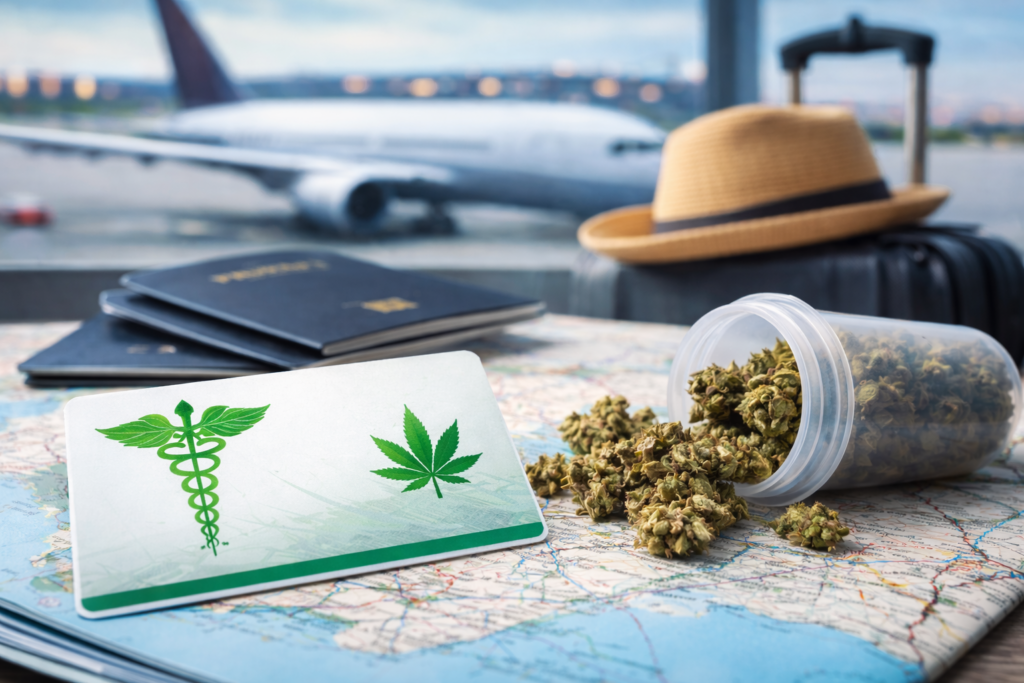
If you are a Pennsylvania medical cannabis patient, you may assume your doctor gave you a prescription that protects you anywhere you go. That assumption is common, and it is dangerous. Pennsylvania medical cannabis is not a prescription, and it does not automatically protect you outside of Pennsylvania. Travel can quickly turn a misunderstanding into an arrest, criminal charges, missed flights, or a life-changing legal problem.
This article explains the difference between a medical cannabis recommendation and a prescription, why it matters under federal and Pennsylvania law, what happens when you travel to other states or foreign countries, and what to do if you are stopped, searched, or charged. It is written to be clear, practical, and focused on protecting your future.
If you want guidance tailored to your situation, you can schedule a consultation with PKN Law by calling (412) 454-5582 or visiting patricknightingale.com/.
Quick Answer
No. In Pennsylvania, medical cannabis is authorized through a physician certification and recommendation. It is not prescribed like traditional medications, and it does not carry the same legal protections as a prescription drug. This becomes most important when you travel, because other states may not recognize Pennsylvania patients, and foreign countries do not.
Key Takeaways
- Medical cannabis in Pennsylvania is a recommendation, not a prescription.
- A Pennsylvania medical cannabis card does not automatically protect you in other states.
- Airports, airplanes, and federal property increase legal risk because federal law still treats cannabis as illegal.
- International travel with cannabis can lead to detention and severe consequences.
- If you are stopped, do not consent to a search and do not make statements. Ask for a lawyer.
Why This Misunderstanding Happens
Pennsylvania uses medical terminology that resembles the prescription system people already understand. Patients register in a medical program. Doctors issue certifications. Dispensaries operate under state regulation. Products are labeled for medical use. Those features make many people assume the legal protections are the same as a prescription filled at a pharmacy.
The problem is that cannabis is treated differently under federal law and is regulated differently from prescription medications. That legal difference is what creates travel risk and exposure to criminal charges.
What Pennsylvania Law Actually Allows
Pennsylvania’s medical cannabis program allows qualified patients to obtain medical cannabis from licensed dispensaries after receiving a physician certification. That certification is a recommendation that the patient has a qualifying medical condition and may benefit from medical cannabis under the program.
A key point for patients is that the certification is not the same as a prescription. A prescription typically involves a medication approved within a prescription framework that carries recognized protections for possession and transport, subject to specific limits and rules. Medical cannabis does not operate inside that framework.
Practical takeaway for Pennsylvania patients: Your Pennsylvania medical cannabis card can help you lawfully obtain products inside Pennsylvania’s program. It is not a universal legal shield when you leave Pennsylvania.
Federal Law and Why It Matters When You Travel
Cannabis remains illegal under federal law and is treated as a Schedule I controlled substance. That classification drives real-world consequences during travel and on federal property, even if you bought cannabis legally under Pennsylvania rules.
This does not mean that every travel situation turns into a federal case. It does mean the risk is real, especially in settings where federal jurisdiction is involved, such as airports, airplanes, and certain federal properties. When federal law is in play, the fact that you are a Pennsylvania medical cannabis patient does not automatically protect you.
Does Your Pennsylvania Medical Cannabis Card Work in Other States?
People often ask whether a Pennsylvania medical cannabis card works in other states. The accurate answer is that it depends on the state, and you cannot assume you are protected.
Some states have no medical cannabis program at all. Some states have a medical program but do not recognize out-of-state patients. A few states offer limited reciprocity for visiting patients, but these rules are often strict and can change at any time. Even in states where adult use of cannabis is legal under state law, possession rules, product restrictions, and transportation rules can still lead to charges.
Airports and Air Travel: Why Risk Increases
Air travel is one of the most common ways people with medical cannabis get into trouble. Screening is routine, and discovery is common. The setting often involves federal jurisdiction and heightened enforcement.
Many travelers believe that showing a medical cannabis card will end the conversation. In reality, it may not. The response depends on the airport, the state you are in, local law enforcement practices, and the facts of the situation.
Common problems include possession discovered during security screening, products that resemble commercial candy or food, cartridges and concentrates that are treated more harshly in some jurisdictions, and statements made by the traveler that can be used as evidence later.
Driving Across State Lines: Why It Can Become a Criminal Case
Driving across state lines can create legal exposure quickly. When you cross a border, you are subject to that state’s laws. If the state does not recognize Pennsylvania medical cannabis patients, you may face possession charges even for small amounts.
Traffic stops also introduce risk. A minor violation can turn into a broader investigation. In some cases, officers look for signs of impairment or use the situation to justify a search.
This becomes especially serious when a stop turns into an impaired driving investigation. A medical cannabis card does not provide immunity from driving under the influence charges. It also does not prevent an officer from treating the presence of cannabis as a factor in the investigation.
International Travel: The Highest Risk Scenario
Foreign travel is where misunderstandings can become catastrophic. A Pennsylvania medical cannabis card has no legal authority in another country. Many countries treat cannabis possession as a serious crime, and enforcement can be strict.
Even a small amount can result in detention, criminal prosecution, and severe penalties. People sometimes believe that medical use will be a defense. In many places, it is not.
Common Myths That Lead to Charges
Myth: My medical cannabis card makes possession legal everywhere.
Reality: It is a Pennsylvania authorization, not a universal license.
Myth: It is legal if it is sealed and labeled.
Reality: Packaging does not make cannabis legal in a jurisdiction where it is prohibited.
Myth: Small amounts do not matter.
Reality: Small amounts still lead to charges, especially in travel settings.
Myth: A recommendation is the same as a prescription.
Reality: A recommendation does not carry the same legal protections as a prescription medication.
Myth: If I bought it legally in Pennsylvania, I can transport it legally.
Reality: Legal purchase does not guarantee legal transport outside Pennsylvania.
Charges You Might Face
The exact charge depends on the facts, but common examples include simple possession of a controlled substance, possession of drug paraphernalia, possession with intent to deliver based on quantity or packaging, driving under the influence when impairment is suspected, and federal exposure when the situation involves federal property or interstate travel.
There are also collateral consequences that can be just as damaging as the case itself, including employment discipline, professional licensing issues, and immigration consequences for non-citizens.
What To Do If You Are Stopped, Searched, or Questioned
If law enforcement approaches you in a vehicle stop, an airport setting, or any travel situation, your actions matter. People often believe they can talk their way out of a problem. That often creates evidence that the government later uses.
General guidance that applies in many situations is to stay calm and respectful, decline consent to search, avoid making statements about possession or use, and ask for a lawyer if you are detained or arrested. If you are not free to leave, you should treat it as a serious situation and protect yourself by remaining silent and requesting counsel.
How PKN Law Can Help
Cannabis cases often involve search and seizure issues, overcharging, and assumptions that do not hold up when evidence is tested. A strong defense starts by analyzing what the government must prove and whether police acted lawfully.
Key defense areas can include challenging the legality of the stop, challenging the legality of the search, testing whether the state can prove knowing possession, fighting intent to deliver allegations that are based on weak indicators, and scrutinizing impaired driving investigations and the reliability of claimed impairment evidence.
Frequently Asked Questions
Is medical cannabis in Pennsylvania a prescription?
No. It is authorized through a physician certification and recommendation, not a traditional prescription.
Can I travel to another state with my Pennsylvania medical cannabis?
You should not assume you are protected. Each state has its own rules, and many states do not recognize out-of-state patients.
Can I fly with medical cannabis if I have a Pennsylvania medical cannabis card?
Air travel is high-risk. Screening and jurisdiction issues can lead to law enforcement involvement even for small amounts.
Does my Pennsylvania medical cannabis card protect me in another country?
No. Foreign countries apply their own laws, and penalties can be severe.
What should I do if I am charged?
Do not discuss the facts with law enforcement. Contact a criminal defense attorney immediately.
Next Steps
If you are planning travel and want to understand the risk, or if you have already been charged with a cannabis related offense, you can schedule a consultation with PKN Law.
Call (412) 454-5582 or visit patricknightingale.com/.
If you are dealing with an urgent situation, the sooner you get counsel involved, the more options you may have to protect your record, your license, and your future.