
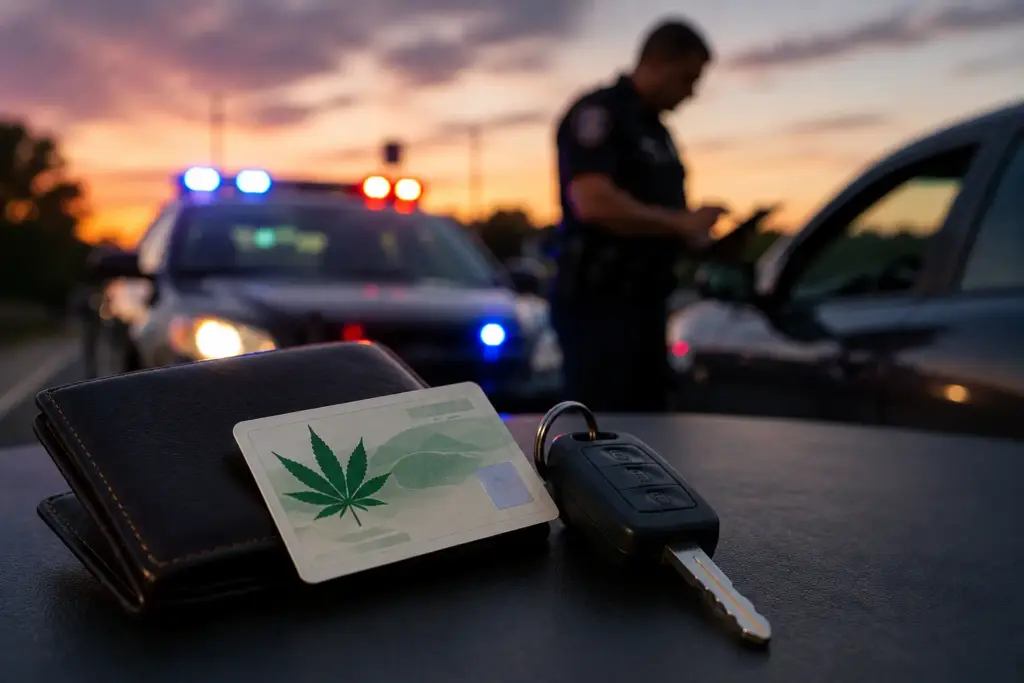
Pennsylvania medical marijuana patients received a significant legal development in April 2026, but the practical effect on driving under the influence cases is more complicated than a headline about cannabis moving to Schedule III might suggest.
Effective April 28, 2026, the United States Department of Justice placed marijuana subject to a state medical marijuana license, along with certain Food and Drug Administration approved marijuana products, into Schedule III under the federal Controlled Substances Act. The federal government is separately considering broader marijuana rescheduling.
For Pennsylvania patients, the change creates a potentially important argument in medical marijuana driving under the influence cases. It does not, however, automatically rewrite Pennsylvania’s Vehicle Code, dismiss pending charges, or guarantee that prosecutors must immediately proceed under an impairment-only theory.
That distinction matters. Pennsylvania’s driving under the influence statute contains separate provisions for the presence of certain controlled substances and for actual impairment. How federal Schedule III treatment interacts with those Pennsylvania provisions is an issue that courts may now have to address.
What Changed on April 28, 2026?
The federal change was narrower than a general legalization or complete rescheduling of marijuana.
The Department of Justice final rule on state-licensed medical marijuana places marijuana subject to a state medical marijuana license in Schedule III under federal law. Marijuana outside the categories covered by the final rule can remain in Schedule I.
This means statements such as “marijuana is now Schedule III everywhere” are too broad. The federal action specifically distinguishes qualifying state medical marijuana systems and certain approved products from marijuana that remains outside those categories.
The change is nevertheless significant for Pennsylvania. Pennsylvania operates a regulated medical marijuana program, and patients participating lawfully in that system now have a new federal classification issue that did not exist when Pennsylvania’s current marijuana driving under the influence cases were litigated under the previous federal framework.
Pennsylvania’s DUI Statute Has Two Very Different Drug Provisions
To understand why Schedule III matters, it is necessary to look at the language of Pennsylvania’s driving under the influence law.
Under 75 Pa.C.S. § 3802(d), subsection (d)(1) addresses the presence of certain controlled substances in a person’s blood. It includes a Schedule I controlled substance and a Schedule II or Schedule III controlled substance that has not been medically prescribed for that individual. The statute also addresses metabolites of those substances.
Subsection (d)(2) is different. It prohibits driving when a person is under the influence of a drug or combination of drugs “to a degree which impairs” the person’s ability to drive safely.
Those are fundamentally different prosecution theories.
Under an impairment theory, the Commonwealth must prove more than the existence of a drug in the body. Evidence concerning driving behavior, coordination, statements, physical observations, testing, video footage, toxicology, and the overall circumstances may become important.
The Schedule III change therefore raises a serious legal question for an authorized Pennsylvania medical marijuana patient: Should the Commonwealth still be permitted to prosecute the patient based principally on the presence of cannabis or a metabolite, or should it have to prove that cannabis actually impaired the patient’s ability to drive safely?
Why the Answer Is Not Automatically Settled
There is a reason to be cautious about saying the federal action immediately resolved Pennsylvania’s medical marijuana driving under the influence problem.
Pennsylvania’s subsection 3802(d)(1) refers to controlled-substance schedules “as defined in” Pennsylvania’s Controlled Substance, Drug, Device and Cosmetic Act. The April 2026 action, by contrast, changed the treatment of qualifying medical marijuana under the federal Controlled Substances Act.
That creates a state and federal statutory interpretation issue.
A defense attorney can argue that the federal government’s recognition of qualifying state medical marijuana as Schedule III fundamentally changes the legal landscape and supports treating lawful medical marijuana similarly to other medically authorized Schedule III substances. At the same time, prosecutors may argue that Pennsylvania’s statutory classifications and the wording of the Pennsylvania Vehicle Code remain controlling unless the Pennsylvania legislature or appellate courts say otherwise.
Until Pennsylvania appellate courts address the consequences of the April 2026 federal action, or the General Assembly changes the relevant statutes, defendants should not assume that possession of a medical marijuana card automatically prevents a subsection 3802(d)(1) charge.
This is an evolving legal question, not an automatic dismissal rule.
What Could Change if Actual Impairment Becomes the Central Issue?
If a court accepts the position that an authorized medical marijuana patient’s case must be evaluated under an impairment standard, the focus of the prosecution can change considerably.
A positive cannabis blood result may still be evidence. It may help establish prior cannabis use. It does not necessarily answer the separate question of whether the driver was impaired at the time the vehicle was being operated.
The National Highway Traffic Safety Administration has recognized an important scientific distinction between cannabis and alcohol. Its review of cannabis-impaired driving research states that, unlike alcohol, there is little evidence of a direct dose-response relationship between blood tetrahydrocannabinol concentration and driver impairment. The research concerning crash risk also contains important limitations and mixed findings. National Highway Traffic Safety Administration’s discussion of cannabis and driver impairment provides additional background on that distinction.
That does not mean cannabis cannot impair driving. It can. It means a cannabis toxicology result should not automatically be treated as equivalent to an alcohol concentration when determining whether someone was capable of safely driving.
The Traffic Stop Becomes More Important
When actual impairment is disputed, what occurred before and during the traffic stop becomes especially important.
Was the driver weaving between lanes, traveling at an unusual speed, nearly causing a collision, or otherwise demonstrating unsafe operation? Or did the stop begin because of an equipment problem, registration issue, or another circumstance unrelated to impaired driving?
The distinction can affect both the legality of the stop and the strength of the Commonwealth’s impairment evidence.
Body camera footage and dashboard video may also matter. An officer’s report might characterize a person as confused, unsteady, or slow to respond. Video may support those observations, contradict them, or provide additional context.
PKN Law discusses these issues in greater detail in Was Your DUI Stop Legal?, including the difference between reasonable suspicion and probable cause during Pennsylvania traffic stops.
A Medical Marijuana Card Does Not Make Impaired Driving Legal
None of these developments creates a right to drive while impaired.
Section 3802(d)(2) remains clear that a person may not operate a vehicle while under the influence of a drug to a degree that impairs the ability to drive safely.
An authorized patient who is actually impaired by medical cannabis can therefore still face a driving under the influence prosecution. Schedule III is relevant to how the Commonwealth may be required to prove the offense. It is not permission to operate a vehicle when cannabis is affecting safe driving.
Patients should separate these two concepts. The legal argument concerns whether mere detection should be enough for a conviction involving lawful medical use. It does not excuse impaired operation.
Blood Testing Still Matters, Even if Presence Alone Is Not Enough
A shift toward an impairment standard would not make toxicology irrelevant.
Blood evidence could still be considered along with the timing of use, observations by police, admissions, driving behavior, field testing, medical history, other medications, and expert testimony.
Defense counsel may also need to examine how the sample was obtained, the time between driving and the blood draw, what compounds were detected, the laboratory’s procedures, chain of custody, and how the Commonwealth intends to interpret the results.
Chemical testing also creates a separate issue under Pennsylvania’s implied consent law. Refusing a properly requested chemical test can have driver’s license consequences apart from the criminal prosecution. PKN Law’s guide to Pennsylvania implied consent and chemical testing explains why a refusal should not be treated as a simple way to avoid a driving under the influence case.
What About Cases That Began Before April 28, 2026?
This may become one of the most important practical questions.
Someone arrested before April 28, 2026 may have a case that is still awaiting trial, disposition, sentencing, or appeal. That person should not assume the federal scheduling change automatically eliminates the charge.
Whether the change can affect an earlier arrest may depend on several issues, including the date of the alleged offense, the exact subsection charged, whether the patient was validly participating in Pennsylvania’s medical marijuana program, the source of the cannabis, the procedural stage of the case, and the legal arguments available in that particular court.
Retroactivity is a legal doctrine with its own rules. A later change in federal controlled-substance treatment does not necessarily apply backward to every state criminal prosecution.
At the same time, a pending case may provide an opportunity for defense counsel to preserve arguments concerning classification, medical authorization, statutory interpretation, impairment, due process, or equal treatment. Those questions should be analyzed before a defendant assumes that a plea or conviction is unavoidable.
The important point is that a pending medical marijuana driving under the influence case deserves a fresh legal review in light of the April 2026 federal action.
What Evidence Should Be Reviewed in a Medical Marijuana DUI Case?
No single piece of evidence should be evaluated in isolation. A meaningful review may involve:
- The reason police initiated the traffic stop
- Body camera and dashboard camera recordings
- The driver’s actual operation of the vehicle
- Statements made to law enforcement
- The officer’s claimed observations of impairment
- Field sobriety exercises and the conditions under which they were administered
- Medical marijuana patient documentation
- Blood draw timing
- Laboratory testing and toxicology reports
- Other medications or medical conditions that could affect observations
- The specific subsection of Section 3802 charged by the Commonwealth
The value of each item depends on the facts of the case. A blood result that appears damaging in isolation may take on a different meaning when the video shows normal speech, coordination, driving behavior, and responsiveness.
Likewise, the absence of dramatic symptoms does not automatically defeat an impairment case. The Commonwealth is entitled to rely on admissible evidence and reasonable inferences. The defense is entitled to test whether that evidence actually proves every element beyond a reasonable doubt.
Did Schedule III Automatically Change Firearm Rights for Pennsylvania Patients?
Firearm eligibility should be treated as a separate question from driving under the influence law.
The April 2026 federal rescheduling action may create new legal arguments regarding medical marijuana and firearm restrictions, but Pennsylvania patients should not assume that their eligibility to purchase, possess, or carry a firearm has automatically been resolved.
The Pennsylvania State Police currently advises that possession of a medical marijuana card and medical marijuana use can result in a federal firearms prohibition and recommends that questions about lawful eligibility be directed to qualified counsel. The current Pennsylvania State Police firearms guidance for medical marijuana cardholders reflects that caution.
Someone facing an existing firearm investigation or charge should avoid relying on general statements about Schedule III. PKN Law’s firearms and gun crimes defense practice addresses Pennsylvania and federal firearm matters that may require individualized analysis.
Why the April 2026 Change Still Matters
The fact that these questions remain unsettled does not make federal rescheduling unimportant.
For years, Pennsylvania medical marijuana patients have faced an unusual conflict. Pennsylvania authorizes medical use through a regulated program, while marijuana’s controlled-substance classification has been used in ways that can expose patients to criminal liability even when actual impairment is disputed.
Federal recognition of state-licensed medical marijuana as Schedule III changes one important part of that legal framework.
What comes next will depend on how Pennsylvania courts interpret the relationship between the federal change, Pennsylvania’s controlled-substance schedules, the Medical Marijuana Act, and Section 3802 of the Vehicle Code.
For a defendant, those issues are not academic. The interpretation can affect what the Commonwealth must prove and what evidence matters most.
Get a Pending Medical Marijuana DUI Case Reviewed Carefully
Patrick Nightingale has more than 24 years of experience working in criminal law as both a former prosecutor and criminal defense attorney. Medical marijuana driving under the influence cases can involve overlapping questions of statutory interpretation, constitutional law, police procedure, toxicology, and medical authorization.
If you have been charged with a medical marijuana driving under the influence offense in Pennsylvania, including a case that began before the April 28, 2026 federal change, do not assume that the charge will automatically disappear or that a blood result automatically decides the case.
You can schedule a confidential consultation with PKN Law or call (412) 454-5582 to discuss how the current law may apply to the facts of your case.
Federal Schedule III treatment does not automatically dismiss a Pennsylvania medical marijuana DUI. It may create an argument that an authorized patient should be prosecuted based on actual impairment rather than cannabis presence alone. Pennsylvania’s DUI statute still raises unresolved state-law classification questions that courts may need to decide.
Frequently Asked Questions
Does Schedule III mean Pennsylvania medical marijuana patients cannot get a DUI?
No. A patient can still be arrested and prosecuted for driving under the influence. Pennsylvania law prohibits driving when a drug impairs a person’s ability to operate a vehicle safely. The unresolved question is whether lawful medical marijuana patients may also be prosecuted based only on the presence provisions of Section 3802(d)(1).
Does a positive THC blood test prove that a medical marijuana patient was impaired?
Not necessarily. A blood test can provide evidence of cannabis exposure, but blood tetrahydrocannabinol concentration does not correlate with impairment in the same straightforward manner as blood alcohol concentration. Other evidence concerning driving behavior and the driver’s condition may therefore be important.
Did Pennsylvania’s DUI statute change when the federal government moved state-licensed medical marijuana to Schedule III?
The April 2026 action was a federal scheduling change. Pennsylvania’s Section 3802 was not automatically rewritten by the federal rule. How the new federal classification interacts with Pennsylvania’s statutory language is an issue that may require judicial interpretation.
Can Schedule III help someone whose medical marijuana DUI arrest occurred before April 28, 2026?
Possibly, but not automatically. The answer may depend on the date of the alleged offense, charges filed, medical authorization, procedural posture of the case, and whether a court determines that the federal change affects the legal analysis. A pending case should be reviewed individually.
Can a Pennsylvania patient drive after using medical marijuana?
A medical marijuana authorization does not permit impaired driving. A patient should not operate a vehicle if cannabis has impaired the ability to drive safely. Section 3802(d)(2) specifically prohibits drug-impaired driving.
Does Schedule III automatically give Pennsylvania medical marijuana patients firearm rights?
No automatic conclusion should be assumed. Pennsylvania State Police currently warns that medical marijuana use can result in a federal firearms prohibition and recommends consulting qualified legal counsel regarding eligibility.
Can refusing a blood test prevent a medical marijuana DUI charge?
Not necessarily. A refusal can create separate driver’s license consequences, and the Commonwealth may attempt to prove impairment through other evidence. The validity of the testing request and refusal should be examined in the individual case.
What should I do if I have a pending Pennsylvania medical marijuana DUI case?
Have the case reviewed based on the current law rather than assuming an older legal analysis still controls. Important issues can include the traffic stop, medical authorization, toxicology, alleged impairment, the subsection charged, and how the April 2026 federal action may affect available arguments.